



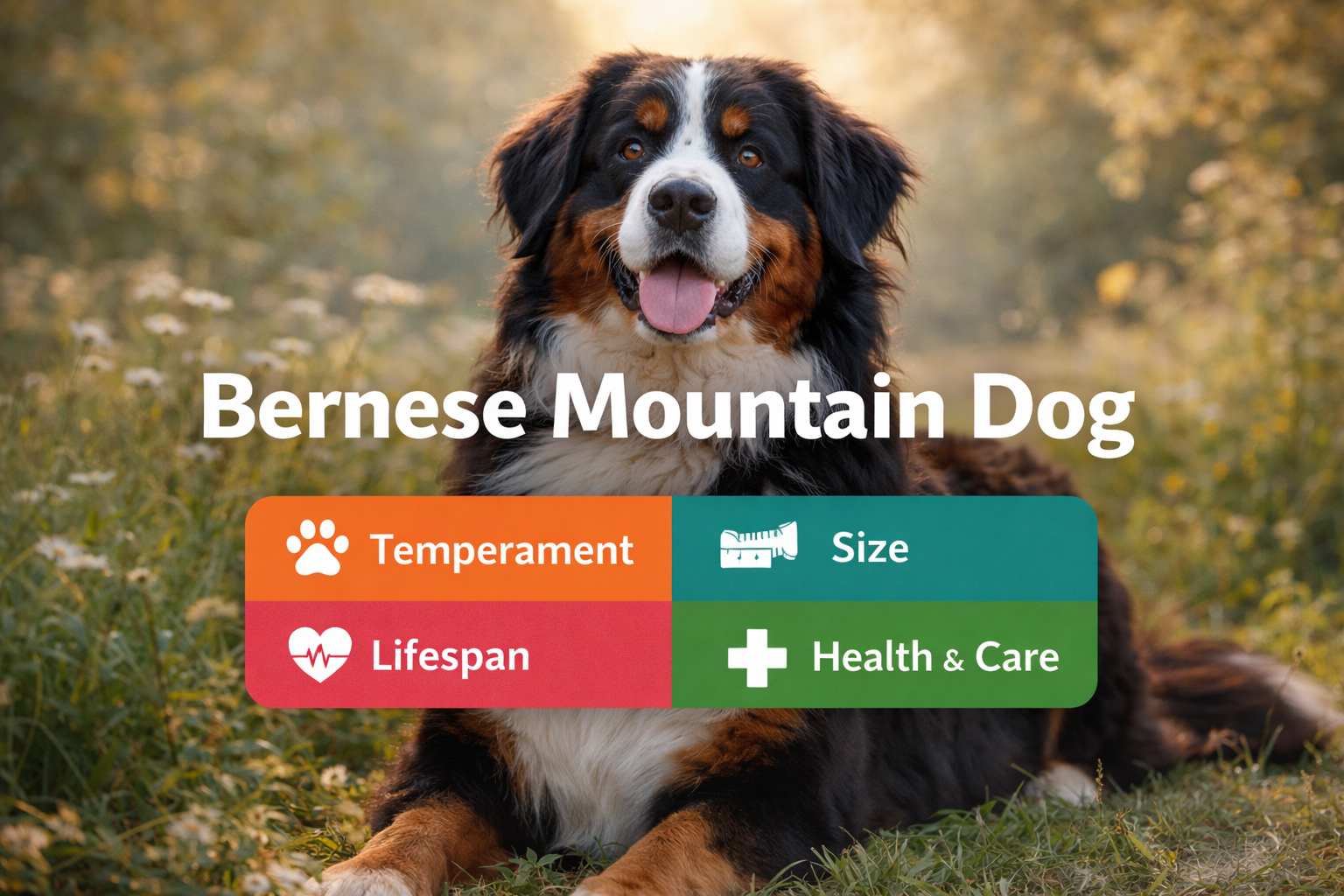
The Bernese Mountain Dog, affectionately called the “Berner,” is one of the most beloved large family dogs. With its striking tri-color coat, gentle personality, and deep loyalty, this Swiss working breed combines strength and sweetness effectively.
The breed originated in the Canton of Bern, Switzerland, and belongs to the AKC Working Group. Males typically stand 25-27.5 inches at the withers and weigh 80-115 pounds, while females are slightly smaller at 23-26 inches and 70-95 pounds. They feature a long, thick double coat with a distinctive black, rust (tan), and white tri-color pattern. Bernese Mountain Dogs are known for being affectionate and loyal companions, though they shed heavily and have an average lifespan of 7-10 years (with many living closer to 7-8 years due to health factors). With proper socialization, they are generally good with children.
History & Origin
The Bernese Mountain Dog developed as a farm dog in rural Switzerland, especially around the canton of Bern. Historically called the “Dürrbächler” or “Berner Sennenhund,” these dogs served as versatile working partners on Alpine farms.
They traditionally:
- Pulled milk carts (draft work)
- Herded cattle
- Guarded property
- Worked in cold, mountainous terrain
In the early 1900s, Swiss cynologist and geologist Professor Albert Heim played a key role in preserving and standardizing the breed when numbers had declined. The American Kennel Club (AKC) officially recognized the breed in 1937, placing it in the Working Group.
Appearance & Size
The Bernese Mountain Dog is sturdy, balanced, and powerful—built for strength rather than speed. It appears slightly longer in body than tall, with a deep chest and well-muscled frame.
Coat & Markings
- Jet black base color (any other ground color is a disqualification)
- Rust (tan) markings above the eyes, on the cheeks, chest, and legs
- White markings, including a blaze on the chest and muzzle, and often on the feet and tail tip
- Thick, weather-resistant double coat (longer outer coat with woolly undercoat) that provides protection in cold climates but leads to substantial shedding
Build
- Broad head with a flat skull
- Expressive, dark brown eyes (blue eyes are a disqualification)
- Bushy tail is carried low when relaxed
- Masculine appearance in males; distinctly feminine in females
Temperament: Are Bernese Mountain Dogs Good Family Dogs?
Yes, Berners are widely regarded as excellent large family dogs when properly bred and socialized. They are sweet, affectionate, and people-oriented.
Key personality traits:
- Deeply loyal and emotionally sensitive
- Gentle and patient with children
- Calm and relaxed indoors
- Intelligent and eager to please, responding well to positive reinforcement training
- Sensitive to harsh corrections, which can undermine their confidence
They thrive on human companionship and do not tolerate prolonged isolation well, sometimes developing separation anxiety. Early socialization is essential for confidence around strangers, other dogs, and new situations.
Exercise Needs
Despite their large size, Bernese Mountain Dogs have moderate exercise requirements rather than high energy demands.
Recommended daily activity:
- 30–60 minutes of moderate exercise (e.g., leisurely walks or play)
- Light hiking, snow play, or cart-pulling/draft work (which taps into their historical instincts)
They are sensitive to heat due to their thick coat and perform best in cooler climates. Avoid intense activity in hot or humid weather; provide exercise during cooler parts of the day and ensure access to shade and water.
Grooming & Shedding
Bernese Mountain Dogs are heavy shedders year-round, with heavier “coat blows” (seasonal shedding of the undercoat) typically occurring in spring and fall.
Grooming routine:
- Brush 2-4 times per week (or more frequently during shedding seasons) using a slicker brush or undercoat rake to remove loose hair and prevent matting
- Bathe every 6-8 weeks or as needed with a gentle dog shampoo
- Trim nails regularly, clean ears, and check for debris in the coat
Expect fur on clothing, furniture, and floors. This is not a low-shedding breed. Consistent grooming helps manage the hair but does not eliminate it.
Health Issues & Lifespan
The average lifespan of a Bernese Mountain Dog is 7-10 years, though many live around 7-8 years. This is shorter than many breeds and is influenced by a higher predisposition to certain serious conditions.
Common health concerns include:
- Hip and elbow dysplasia (hereditary joint issues leading to arthritis)
- Cancer (a leading cause of death; histiocytic sarcoma is particularly prevalent in the breed, with breed surveys indicating high overall cancer mortality rates)
- Gastric dilatation-volvulus (bloat/GDV)
- Arthritis
- Hypothyroidism
- Eye disorders (e.g., cataracts)
Responsible breeders perform health testing, including OFA (Orthopedic Foundation for Animals) evaluations for hips and elbows, genetic screenings where available, and review of family cancer history. Maintaining a healthy weight, providing routine veterinary care, and choosing puppies from health-tested parents can help support better outcomes.
Living Environment: Is This Breed Right for You?
Ideal for:
- Families with older children and sufficient space (yard recommended)
- Homes in cooler climates
- Owners committed to companionship, grooming, and moderate exercise
- Those who can afford the food and potential veterinary costs of a large breed
Less suitable for:
- Small apartments or homes without outdoor access
- Extremely hot or humid regions (without strong climate control)
- Households where the dog would be left alone for long periods daily
- People seeking a low-shedding or low-maintenance dog
Pros & Cons
Pros
- Loyal, gentle, and affectionate family companion
- Striking appearance and calm indoor demeanor
- Intelligent and trainable with positive methods
- Enjoys family activities and has a sweet nature
Cons
- Heavy shedding and grooming demands
- Shorter lifespan compared to many breeds
- Predisposition to serious health issues, including cancer and joint problems
- Higher food and potential medical expenses due to size
FAQ on Bernese Mountain Dog
How long do Bernese Mountain Dogs live?
The average lifespan is 7-10 years, with many living closer to 7-8 years. Individual longevity varies based on genetics, health testing, diet, and care. Some exceptional dogs reach their early teens, but this is not typical.
Do Bernese Mountain Dogs shed a lot?
Yes. They are heavy shedders year-round due to their double coat, with increased shedding during seasonal coat blows. Regular brushing is essential to manage it.
Are Bernese Mountain Dogs aggressive?
No. Properly socialized Berners are typically gentle, affectionate, and non-aggressive. They may be reserved with strangers but are not known for guarding aggression.
Can Bernese Mountain Dogs live in hot climates?
They can manage with precautions (air conditioning, limited outdoor time during heat, and exercise only in cooler hours), but their thick coat makes them prone to overheating. Cooler climates are far more suitable.
Are Bernese Mountain Dogs good for first-time owners?
They can be suitable if the owner is prepared for the grooming, exercise, size-related costs, and potential health challenges. Researching the breed thoroughly and working with a responsible breeder is important.