

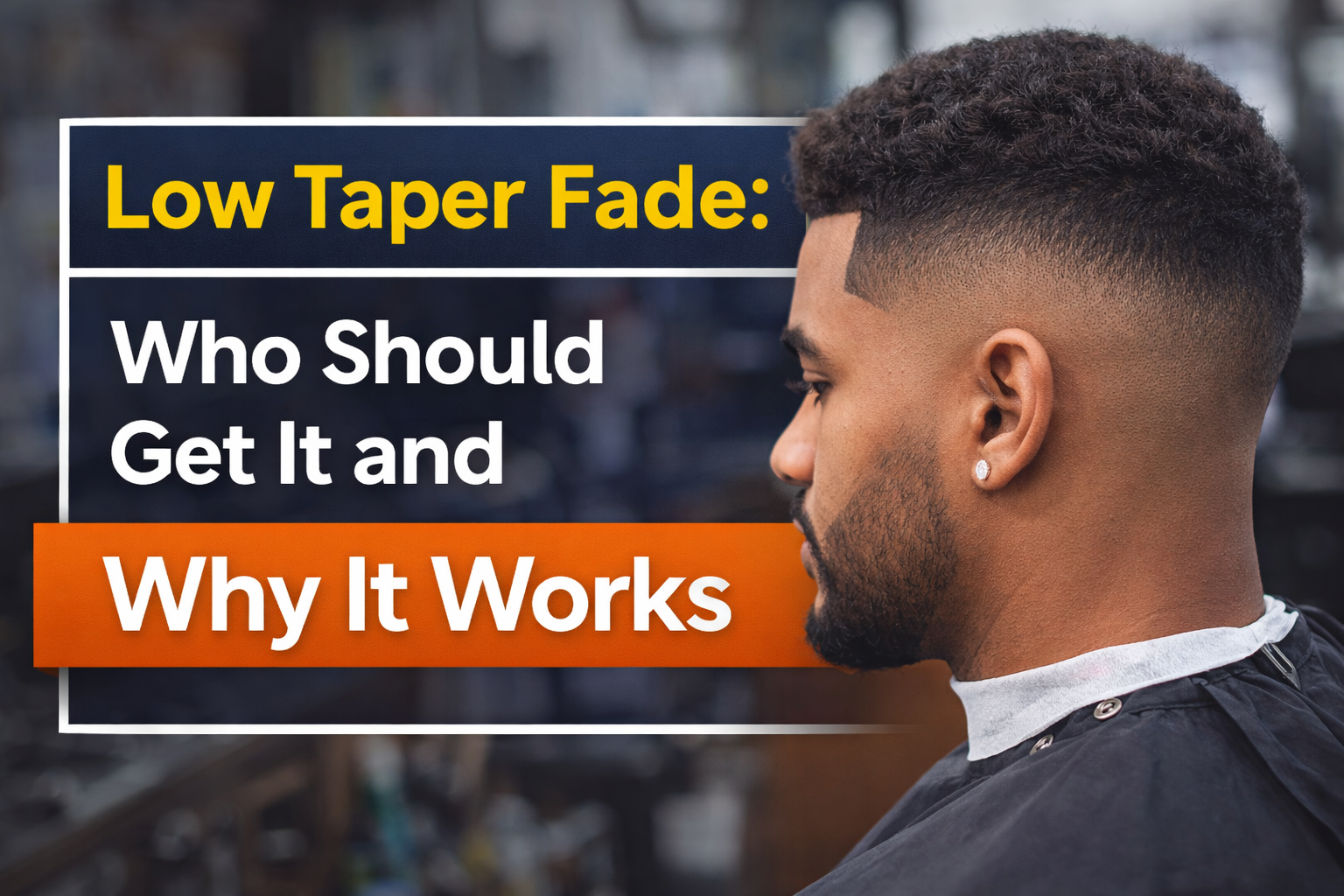
A low taper fade is a men’s haircut featuring a gradual shortening of hair that begins low around the ears and neckline, blending smoothly into longer hair on top. It delivers a clean, professional appearance without dramatic contrast.
In 2026, the low taper fade continues as a staple haircut. Its subtle blend suits diverse lifestyles, from corporate offices to casual daily wear. It maintains neat sides while allowing versatile styling on top, making it reliable, low-maintenance, and adaptable across hair types and face shapes.
What Is a Low Taper Fade?
A taper fade combines classic taper techniques (gradual shortening) with fade blending (using clippers for a smooth gradient). The “low” refers to the starting point: typically just above the ears, curving around the neckline, with minimal removal of bulk higher up.
Key features:
- Subtle transition: A natural, soft blend rather than a harsh line or skin exposure.
- Polished yet natural look: Keeps more hair density on the sides compared to stronger fades.
- Versatile top: Pairs with anything from short textured crops to longer, flowy styles.
It differs from a pure classic taper (scissors-only, no clipper gradient) and from a low fade (which removes more noticeable bulk near the ears for sharper contrast, while a low taper is gentler and edge-focused).
Why the Low Taper Fade Remains Popular
This style fits modern grooming priorities: clean without being extreme. Men choose it for these reasons:
- Professional and conservative enough for offices, schools, or formal settings.
- Grows out gracefully, avoiding a messy phase.
- Easy to style and maintain with basic products.
- Works across straight, wavy, curly, thick, thin, or coily hair.
- Timeless appeal that doesn’t chase short-lived trends.
In 2026, the emphasis is on subtle, intentional grooming, clean edges that look intentional even after a couple of weeks.
Low Taper Fade vs. Mid and High Taper Fade
The main difference lies in where the blend starts and the level of contrast:
- Low Taper Fade: Starts low (about 1 inch above the ears/neckline). Subtle and conservative. Best for professionals, beginners, or those wanting a forgiving style that ages well.
- Mid Taper Fade: Begins around the temples (midway up the sides). More balanced and noticeable, offering versatility for most people.
- High Taper Fade: Starts higher (near or above the temples). Bold and dramatic, with stronger contrast.
Low versions are the most forgiving for growth and maintenance, requiring touch-ups less frequently than higher or skin fades.
Low Taper vs. Low Fade: A low taper focuses on cleaning and blending the edges/neckline with minimal bulk removal, preserving natural side density for a softer look. A low fade creates more defined contrast by shortening sides more aggressively.
Why Choose a Low Taper Fade?
It is one of the most adaptable cuts available:
- Suitable for nearly all ages and professions.
- Complements round, oval, square, oblong/long, and diamond face shapes (with top styling adjustments for balance, e.g., volume on top for round faces to add height and elongation; softer blending for long faces to avoid excess length).
- Performs well with all hair textures: controls bulk in thick hair, adds structure to thin hair, and showcases curls without overwhelming them.
- Low maintenance: Typically needs barber visits every 3-4 weeks, as the subtle blend grows out naturally.
- Simple styling: A matte clay, pomade, or sea salt spray provides texture or hold.
It is especially effective for curly or coily hair on top (common in many communities), but remains universal. Consult a barber for irregular hairlines.
Popular Low Taper Fade Styles in 2026
Current variations emphasize texture, natural movement, and pairing with beards or facial hair:
- Classic Low Taper with Textured Crop: Short, layered top for a neat, everyday vibe.
- Low Taper with Curls or Waves: Let natural texture shine while keeping sides controlled.
- Low Taper with Side Part or Comb-Over: Sophisticated and professional.
- Low Taper Burst Fade Variation: Gentle curve around the ears for subtle flair without going full burst.
- Longer Top Low Taper: Flowy or fringe styles on top for a modern, effortless edge.
- Low Taper with Beard: Pairs seamlessly with a faded or shaped beard for balanced grooming.
Trends lean toward textured tops, middle parts, and soft blowouts rather than overly sculpted looks. Celebrities like Zayn Malik frequently wear variations with longer, textured tops blended into clean sides.
How to Get a Low Taper Fade (Step-by-Step)
Communicate clearly with your barber: “I’d like a low taper fade, keeping length and texture on top, please show examples.”
Basic process:
- Decide on top length and style (e.g., textured crop, side part).
- Barber starts with longer clipper guards low on the sides and neck, gradually decreasing guards upward.
- Blends using lever adjustments or scissor-over-comb for seamlessness.
- Cleans and shapes the neckline (tapered for a natural look or blocked for definition).
- Texturizes or layers the top as needed.
How to Style and Maintain Your Low Taper Fade
- Daily Styling: Apply sea salt spray for texture, matte clay for natural hold, or pomade for a slick finish. Blow-dry for volume if desired.
- Recommended Products: Matte pastes or clays for everyday; light gel for shine on special occasions.
- Maintenance: Barber touch-ups every 3-4 weeks (or 2-3 if hair grows quickly). Wash 2-3 times per week to avoid buildup while preserving natural oils.
- At-Home Care: Use guarded clippers for minor neckline cleanup between visits. Protect from excessive sun to prevent uneven color shifts in darker hair.
Tips for longevity: Let it grow out intentionally; the low starting point helps it transition smoothly into a longer style.
Who Should Get a Low Taper Fade?
Nearly anyone seeking a sharp yet understated look. It is ideal for:
- Office or professional environments (one of the most conservative fade/taper options).
- Beginners to fades or those preferring subtlety.
- Students, parents, or busy professionals.
- All hair types and most face shapes.
It works particularly well if you want neat sides without high contrast or frequent upkeep. Avoid or modify if you prefer uniform long hair all over or have specific hairline concerns—always consult an experienced barber.
The low taper fade is more than a haircut; it is a practical, confidence-boosting staple. In 2026, it evolves with textured and natural tops but retains its clean, effortless foundation. Bring reference photos to your barber and try it; you’ll likely stick with it for years.
Frequently Asked Questions About Low Taper Fade
How long does a low taper fade last?
It typically stays fresh-looking for 2–4 weeks, often longer than higher fades because the subtle blend grows out more gracefully. Factors like hair growth rate and texture influence this.
Is a low taper fade good for office or professional jobs?
Yes. It is among the most professional men’s haircuts, keeping sides neat and clean without appearing overly bold or trendy.
Does a low taper fade work for all face shapes?
It suits most face shapes well. The gradual blend helps balance features and pair with appropriate top volume (e.g., height for round faces, moderate length for oblong faces).
Low taper fade vs. low fade, what’s the difference?
A low taper fade is subtler, focusing on edge cleanup and a soft gradient while retaining more side hair density. A low fade removes more bulk for stronger contrast and a cleaner “faded” effect near the ears.
Is a low taper fade good for beginners?
Absolutely. Barbers often recommend it as an easy entry into modern grooming because it is forgiving and versatile.