


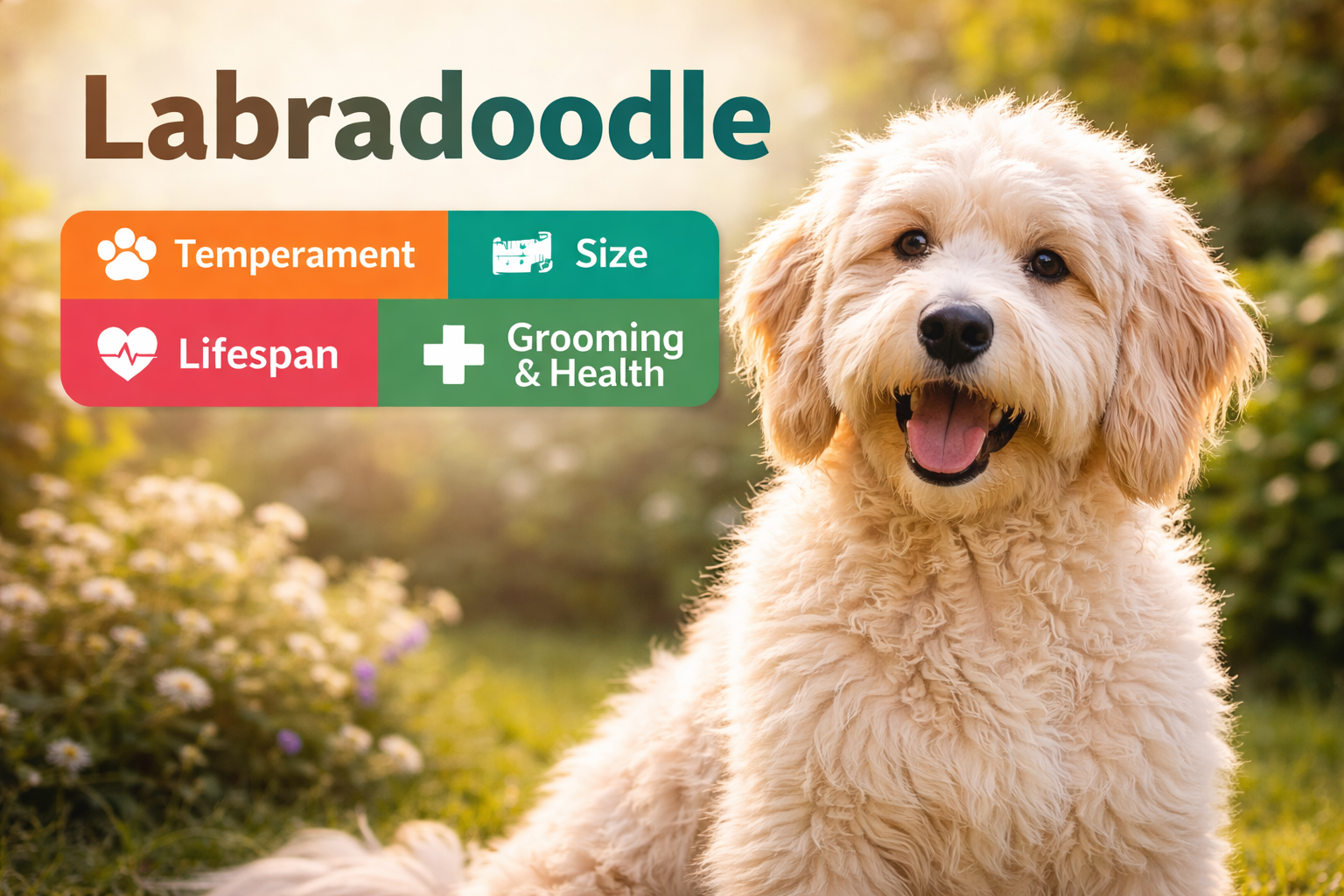
The Labradoodle ranks among the world’s most popular designer dogs, cherished for its teddy-bear looks, curly or wavy coat, friendly nature, high intelligence, and often low-shedding qualities. This cross between a Labrador Retriever and a Poodle combines the Labrador’s outgoing temperament with the Poodle’s elegance and hypoallergenic-leaning coat. Labradoodles come in standard and miniature sizes, typically live 12-15 years, and thrive as family companions, therapy dogs, or active pets, provided they receive proper exercise, grooming, and training.
History and Origins
The Labradoodle was intentionally developed in Australia in 1989 by Wally Conron, breeding manager at the Royal Guide Dogs Association of Australia (now Guide Dogs Victoria). Conron aimed to create a guide dog for a blind woman in Hawaii whose husband suffered from severe allergies to dog hair. He sought to blend the Labrador Retriever’s reliable temperament and working ability with the Poodle’s low-shedding, curly coat.
The first litter included a dog named Sultan, who successfully became a guide dog. Conron coined the name “Labradoodle,” and while the breed was initially developed as a service-dog solution, it quickly gained popularity as a companion animal worldwide.
Note: Later breeding programs in Australia developed the Australian Labradoodle by incorporating additional breeds (such as English and American Cocker Spaniels, and sometimes the Irish Water Spaniel or Curly-Coated Retriever) to improve coat consistency, temperament predictability, and overall traits. These multi-generational dogs often differ from early-generation Labradoodles (straight Labrador × Poodle crosses), which can vary more in appearance and shedding.
Conron later expressed regret over the “designer dog” boom his creation sparked, citing concerns about irresponsible breeding leading to health and temperament issues in some lines. Responsible breeders today focus on health testing to mitigate this.
Appearance and Size
Labradoodles are famous for their adorable “teddy bear” appearance: expressive eyes, floppy ears, athletic build, and soft, plush coats that give them a cuddly look.
Coat Types (which can be unpredictable in first-generation crosses):
- Fleece – Soft, wavy or loosely curly; the most popular and often easiest to manage.
- Wool – Tighter, denser curls similar to a Poodle; highly non-shedding but requires more grooming.
- Hair – Straighter and more Labrador-like; sheds more and is lower maintenance but less hypoallergenic.
Common Colors: Black, chocolate, cream, apricot, red, café au lait (caramel tones), gold, silver, and parti or phantom patterns. Coat color can lighten or change as puppies mature.
Because they are not a purebred with fixed standards, sizes vary:
- Standard Labradoodle: 21-24+ inches tall at the shoulder; 50-90 pounds (sometimes heavier).
- Miniature Labradoodle: 14-20 inches tall; 15-35 pounds (smaller versions often use Miniature or Toy Poodles).
They inherit the Labrador’s sturdy, athletic frame and the Poodle’s refined elegance.
Temperament: Excellent Family Dogs?
Yes, well-bred Labradoodles generally make outstanding family pets. They are:
- Extremely friendly, affectionate, and people-oriented.
- Highly intelligent and eager to please (thanks to both parent breeds ranking among the smartest dogs).
- Playful, gentle with children, and sociable with other pets when properly socialized.
- Energetic but adaptable—not typically hyper or destructive with enough stimulation.
They excel in obedience, agility, therapy work, and family adventures. Positive reinforcement training works best, and they learn quickly. However, they thrive on human companionship and can develop separation anxiety if left alone for long periods. Australian Labradoodles often have a slightly calmer, more consistent disposition than early-generation ones.
Exercise and Mental Stimulation
Labradoodles are moderately to highly energetic and need 1–2 hours of daily activity (adjusted for size and age) to stay happy and prevent boredom behaviors like chewing or excessive barking. Include:
- Brisk walks, fetch, hiking, or swimming (many love water).
- Mental challenges: puzzle toys, obedience training, or agility courses.
Without enough exercise and enrichment, they may become restless. Puppies and adolescents especially need structured play to channel their energy.
Grooming and Coat Care
“Low-shedding” does not mean “low-maintenance.” Labradoodle coats mat easily without regular care, and grooming is essential for skin health.
Requirements:
- Brush 2-5 times per week (more for wool coats; use a slicker brush and comb to prevent mats).
- Professional grooming every 6–8 weeks (many owners prefer a shorter “puppy cut” for ease).
- Regular ear cleaning (floppy ears trap moisture, raising infection risk).
- Nail trims and dental care as needed.
Fleece coats are often the easiest; wool coats need the most attention; hair coats shed more but are simpler to groom. Start grooming routines early to make it a positive experience.
Health and Lifespan
Average lifespan: 12–15 years (miniatures often live on the longer end).
As a crossbreed, Labradoodles may enjoy some hybrid vigor, but they can inherit issues from both parents. Common concerns include:
- Hip and elbow dysplasia.
- Progressive retinal atrophy (PRA) and other eye conditions.
- Allergies and skin issues.
- Ear infections.
- Hypothyroidism, Addison’s disease, and joint problems.
- In some lines: exercise-induced collapse (from Labs) or von Willebrand’s disease.
Responsible breeders perform:
- OFA or PennHIP testing for hips/elbows.
- Eye certifications (CERF or equivalent).
- Genetic (DNA) screening for breed-specific diseases.
Choose breeders who health-test parents, provide transparent results, and prioritize temperament. Maintain a healthy weight, feed quality food, and schedule routine vet visits for the best outcomes.
Living Environment and Suitability
Labradoodles adapt well to family homes, active lifestyles, and even apartments (if exercised sufficiently). They handle various climates but need shade and cooling in hot weather. They are happiest in households with frequent human interaction and are not ideal for owners who work long hours without doggy daycare or a pet sitter.
Pros and Cons
Pros:
- Loving, social, and great with kids and families.
- Intelligent and highly trainable.
- Often low- to non-shedding (ideal for many allergy sufferers).
- Versatile: therapy, service, or companion roles.
- Long lifespan with good care.
Cons:
- High grooming demands and potential for matting.
- Needs regular daily exercise and mental stimulation.
- Prone to separation anxiety.
- Coat and size can be unpredictable in early generations.
- Risk of health issues if not from tested lines.
FAQs on Labradoodle
Are Labradoodles hypoallergenic?
They are often low-shedding but not completely hypoallergenic. Coat type determines allergen levels.
How long do Labradoodles live?
Most live 12–15 years with proper care.
Do Labradoodles shed?
Some shed very little, especially fleece or wool coats. Hair coats shed more.
Are Labradoodles aggressive?
They are typically friendly and gentle when properly socialized.
Do Labradoodles require a lot of grooming?
Yes. Regular brushing and professional grooming every 6–8 weeks are recommended.