



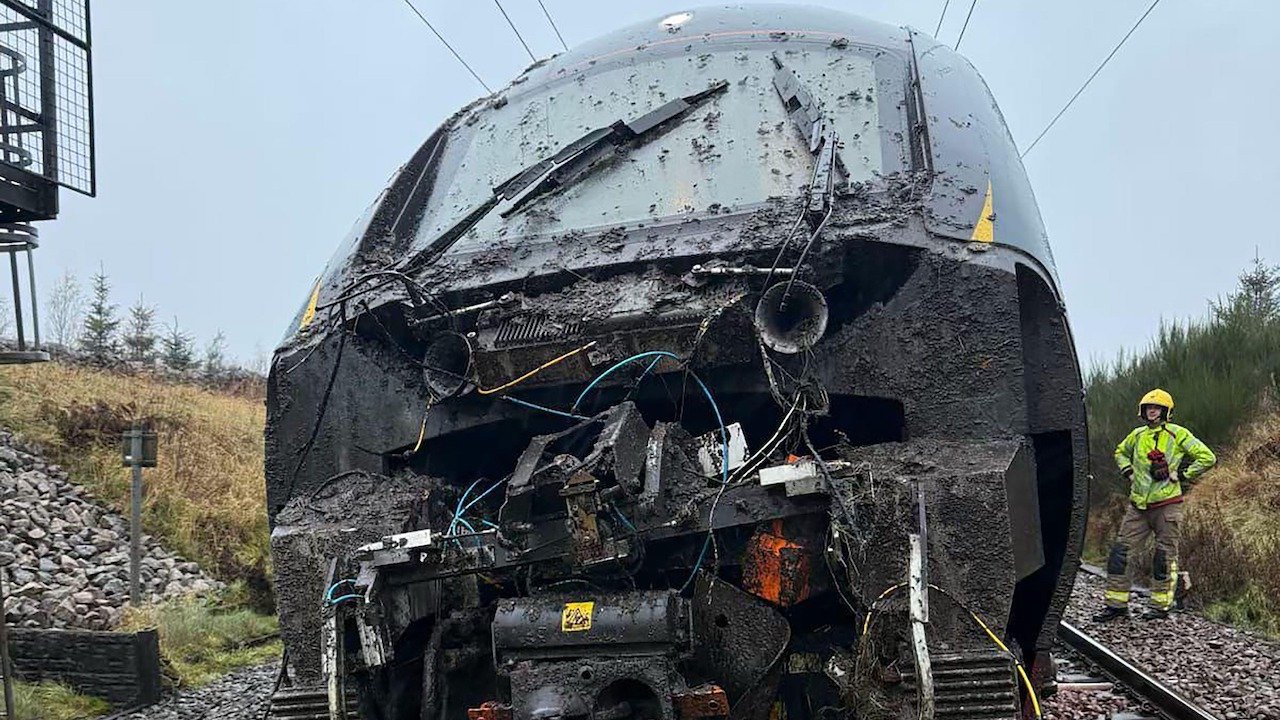
A significant rail incident occurred in Cumbria when an early morning train travelling from Glasgow to London derailed, reportedly after striking a landslip on the West Coast Mainline. The accident triggered widespread travel disruption, intense emergency responses, and a rapid focus on infrastructure resilience and passenger safety.
What Happened: Timeline and Immediate Scene
On Monday morning at 6:10 GMT, the Avanti West Coast service (04:28 from Glasgow Central to London Euston) derailed near Shap, Cumbria, during harsh weather conditions. The train, carrying 87 people, including staff, derailed at a speed of approximately 80 miles per hour. Network Rail operations director Sam MacDougall confirmed that the front carriage of the 11-coach train derailed at a high point on the Mainline as it hit a landslide, bringing operations to a halt on lines north of Preston and south of Carlisle.
Passengers experienced sudden screeching, jolts, and loss of power before quick communication from staff confirmed the derailment. Most on board remained calm, with confusion giving way to an orderly evacuation and safe relocation to a nearby hotel for onward transport.
Critically, only four minor injuries resulted, none requiring hospitalisation. Emergency services, including North West Ambulance Service and British Transport Police, were swift to assess every passenger, provide shelter at a rest centre, and coordinate evacuation.
Impact: Disruption Across Rail Networks
Train services on the West Coast Mainline were immediately suspended, leaving passengers of both Avanti and TransPennine Express stranded and services disrupted. Southbound trains from Edinburgh and Glasgow to London Euston faced cancellation, while northbound Avanti trains terminated at Preston. TransPennine services are halted at Carlisle or Preston, with replacement buses available only hourly due to supply constraints.
Rail operators advised against travel north of Preston for several days, and accepted tickets on alternate lines and companies, including ScotRail, LNER, CrossCountry, and Northern. Northern trains in Cumbria continued running, but the overall scale of disruption affected thousands of travellers, rippling through regional schedules and causing delays and confusion.
The Cause: Landslips, Weather, and Infrastructure Vulnerabilities
Early reports and investigations indicate that severe weather, particularly heavy rainfall, was the primary factor contributing to the landslip. Cumbria had received over a third of its expected November rainfall within just three days, saturating the ground and triggering instability on the steep slopes near the railway.
Local leaders and rail officials noted that frequent heavy rain and the topography around Shap create persistent risks for landslips. Shap, the highest point on the West Coast Mainline at 916 feet above sea level, has seen previous incidents related to similar conditions. Last year, heavy rain caused delays due to a landslip on the same stretch of road.
Safety infrastructure is designed for challenging terrain, trains remained upright, and the rapid coordinated response minimised injuries. Still, the event underscores the vulnerability of major rail arteries to extreme weather and the need for ongoing investment in both weather monitoring and railway fortification.
Response and Passenger Safety
The evacuation and emergency measures were handled swiftly and effectively. As soon as the derailment was confirmed, passengers were calmly escorted to safety, triaged for injuries, and then moved to the nearby Shap Wells Hotel, where onward travel arrangements were made.
Network Rail praised staff and emergency responders for their work in adverse weather and difficult terrain. The Rail Accident Investigation Branch was tasked with investigating the causes, while management shifted its focus to clearing debris and restoring service as quickly as possible.
Official Statements and Wider Reactions
Political leaders from Scotland and local constituencies voiced relief at the absence of serious injuries, emphasising the importance of strong infrastructure investment. Liberal Democrat MP Tim Farron promised to raise the issue in Parliament, pushing for long-term upgrades on this vital corridor.
Rail operators and government agencies pledged support, clear communication, and ongoing safety reviews. Passengers were counselled to check schedules before travel and use accepted tickets on alternative lines.
Lessons Learned and Next Steps
Train derailments caused by landslips underscore the growing risk that climate change and extreme weather pose to rail infrastructure. The railway in Cumbria is at increased risk due to geographical features and weather patterns, demanding more robust engineering solutions and real-time monitoring.
The absence of life-threatening injuries in this incident demonstrates the value of modern train design and comprehensive emergency planning. However, this disruption calls for reassessment of maintenance regimes, slope management, and contingency plans to mitigate future risks.





1 Comment
Pingback: Bella Culley Freed: Pregnant UK Teen's Ordeal Prison Ends