



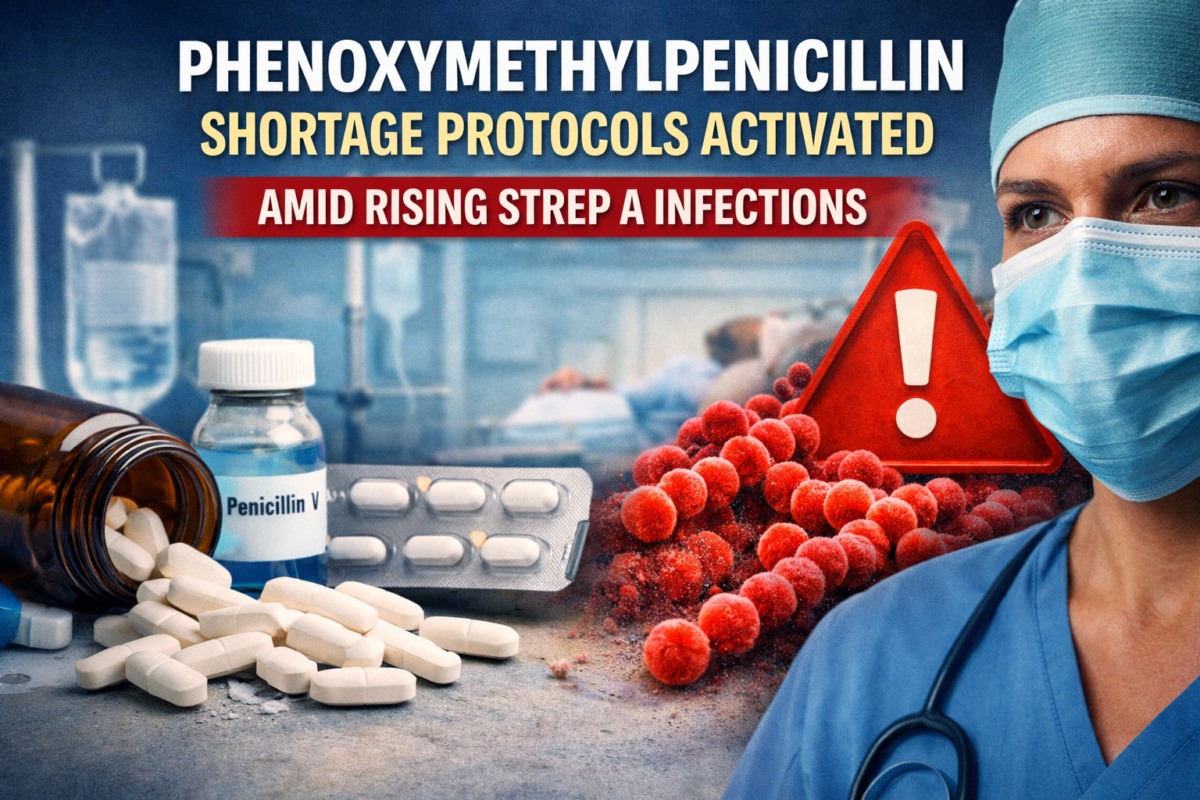
Phenoxymethylpenicillin (also known as Penicillin V or Penicillin VK) is a widely used oral beta-lactam antibiotic essential for treating common bacterial infections and preventing certain complications. Recent surges in Group A Streptococcus (Strep A) infections have placed renewed pressure on its supply, prompting healthcare systems, particularly in the UK, to activate contingency measures. This article provides a clear, up-to-date overview of the drug’s history, uses, mechanism, safety profile, and current supply context.
Key Facts at a Glance
| Attribute | Details |
|---|---|
| Brand/Generic Names | Phenoxymethylpenicillin, Penicillin V, Penicillin VK |
| First Synthesised | 1948 by Eli Lilly |
| Primary Uses | Strep throat, tonsillitis, skin/soft tissue infections, dental infections; prevention of rheumatic fever and post-splenectomy infections |
| Administration | Oral tablets or liquid (suspension/solution) |
| Mechanism | Inhibits bacterial cell wall synthesis |
| Common Side Effects | Nausea, diarrhoea, rash |
| Status | On the WHO List of Essential Medicines, the generic availability worldwide |
Historical Background
Penicillin was first discovered in 1928 by Alexander Fleming. While his work focused on benzylpenicillin (Penicillin G), phenoxymethylpenicillin was developed later as an acid-stable oral form. It was first synthesised in 1948 by Eli Lilly in the United States. Its key advantage, stability in stomach acid, allowed reliable oral administration, revolutionising the treatment of mild to moderate infections outside hospitals.
Commercial production advanced in the early 1950s, and the drug quickly became a staple in outpatient care. It remains on the World Health Organization’s List of Essential Medicines due to its proven efficacy, safety, and affordability in generic form.
Medical Uses and Indications
Phenoxymethylpenicillin is a narrow-spectrum antibiotic primarily effective against Gram-positive bacteria, especially Streptococcus pyogenes (Group A Strep).
Main indications include:
- Treatment of strep throat (streptococcal pharyngitis), tonsillitis, and scarlet fever
- Skin and soft tissue infections (e.g., cellulitis, impetigo when caused by susceptible organisms)
- Dental infections such as abscesses or severe gingivitis
- Prevention of recurrent rheumatic fever
- Prophylaxis against infections in patients who have had a splenectomy or those with sickle cell disease
It is also used in some cases of mild erysipelas or early Lyme disease (in specific populations). However, it is not effective against viruses, most Gram-negative bacteria, or beta-lactamase-producing organisms like many staphylococci. Microbiological testing is recommended when the causative pathogen is uncertain.
How It Works: Mechanism of Action
As a beta-lactam antibiotic, phenoxymethylpenicillin binds to penicillin-binding proteins (PBPs) inside bacterial cells. This interferes with the final stage of peptidoglycan synthesis in the cell wall, weakening the structure and leading to bacterial cell lysis and death. It is most effective against actively dividing bacteria. Consistent blood levels above the minimum inhibitory concentration (MIC) are key to successful treatment.
Dosage and Administration
The drug is taken orally as tablets or liquid formulations, usually 3–4 times daily. Dosing depends on the patient’s age, weight, infection severity, and kidney function. It is often recommended to take it on an empty stomach or with food to reduce stomach upset, though guidance can vary by formulation. Treatment duration is typically 5–10 days. A prescription is always required.
Side Effects and Safety Profile
Common side effects (affecting up to 1 in 10 people):
- Nausea, vomiting, or diarrhoea
- Mild stomach discomfort
- Skin rash or itching
Rare but serious effects include allergic reactions ranging from mild rashes to severe anaphylaxis. Patients with a known penicillin allergy must avoid it and inform their doctor. Other rare effects can include black hairy tongue.
The antibiotic is generally considered safe during pregnancy and breastfeeding under medical supervision. Patients with kidney or liver impairment may need dose adjustments. Always disclose full medical and medication history to avoid interactions.
Antibiotic Resistance and Limitations
Group A Streptococcus remains highly susceptible to phenoxymethylpenicillin worldwide, with no documented resistance in this pathogen. Resistance in other bacteria often stems from beta-lactamase enzymes (which break down the drug) or altered PBPs. Its narrow spectrum helps limit broader resistance development compared to wider-spectrum antibiotics.
Supply Challenges and Recent Developments
Phenoxymethylpenicillin has faced periodic supply pressures, most notably in late 2022 and early 2023, when a surge in Strep A and scarlet fever cases among children in the UK dramatically increased demand for liquid formulations. In December 2022, UK authorities issued Serious Shortage Protocols (SSPs) for several phenoxymethylpenicillin products (including 250mg/5ml oral solution and tablets). These protocols allowed pharmacists to supply alternative strengths or forms without needing a new prescription, helping maintain patient access.
The SSPs for phenoxymethylpenicillin expired in 2023. As of April 2026, no active nationwide SSPs are in place for this antibiotic, though local or temporary supply issues can still occur. A precautionary Class 3 recall was issued in December 2024 for one batch of Kent Pharma UK’s phenoxymethylpenicillin 250mg/5ml oral solution sugar-free due to stability/assay concerns.
In the 2025–2026 season, UK Health Security Agency reports show typical seasonal increases in scarlet fever and Group A streptococcal activity, with continued emphasis on appropriate antibiotic prescribing. Phenoxymethylpenicillin remains a first-line option for suspected streptococcal sore throat in many guidelines (including under the NHS Pharmacy First service).
Globally, rising invasive Group A Strep trends have been noted in some regions post-COVID, but penicillin susceptibility remains consistent.
Role in Modern Healthcare
Phenoxymethylpenicillin continues to be one of the most frequently prescribed antibiotics for community-acquired infections due to its targeted action, low cost, and favourable safety profile. Its use in dental and paediatric settings is particularly valued for minimising unnecessary broad-spectrum exposure.
FAQs About Phenoxymethylpenicillin
What is phenoxymethylpenicillin mainly used for?
It treats bacterial infections caused by susceptible organisms, especially strep throat, tonsillitis, skin infections, and dental issues. It is also used to prevent rheumatic fever and certain infections in high-risk patients.
How is phenoxymethylpenicillin taken?
Orally as tablets or liquid, usually 3–4 times a day for 5–10 days, following the prescribed dose.
Is phenoxymethylpenicillin safe in pregnancy or breastfeeding?
Generally, yes, when prescribed by a doctor. It has a long safety record, but medical supervision is essential.
What are the main side effects?
Common: nausea, diarrhoea, rash. Serious (rare): allergic reactions, including anaphylaxis.
Can it treat viral infections like colds or flu?
No. It only works against certain bacteria and does not affect viruses.
Why do shortages happen?
Shortages are usually driven by sudden spikes in demand (e.g., Strep A outbreaks), manufacturing issues, or supply chain disruptions. In 2022–2023, the UK used temporary protocols to manage this.
Is Group A Streptococci still sensitive to it?
Yes. Streptococcus pyogenes remains universally susceptible to penicillin-class antibiotics, making phenoxymethylpenicillin a reliable first-line choice.
Is alcohol allowed while taking it?
Moderate alcohol consumption does not directly interfere with the antibiotic, but it may worsen side effects like stomach upset.
How do you know if it’s working?
Improvement in symptoms usually occurs within 2–3 days. If symptoms persist or worsen, consult a doctor; it may indicate a different cause or need for review.
Is it still commonly prescribed in 2026?
Yes. It remains a cornerstone antibiotic for appropriate bacterial infections worldwide, supported by its inclusion in essential medicines lists and national guidelines.