


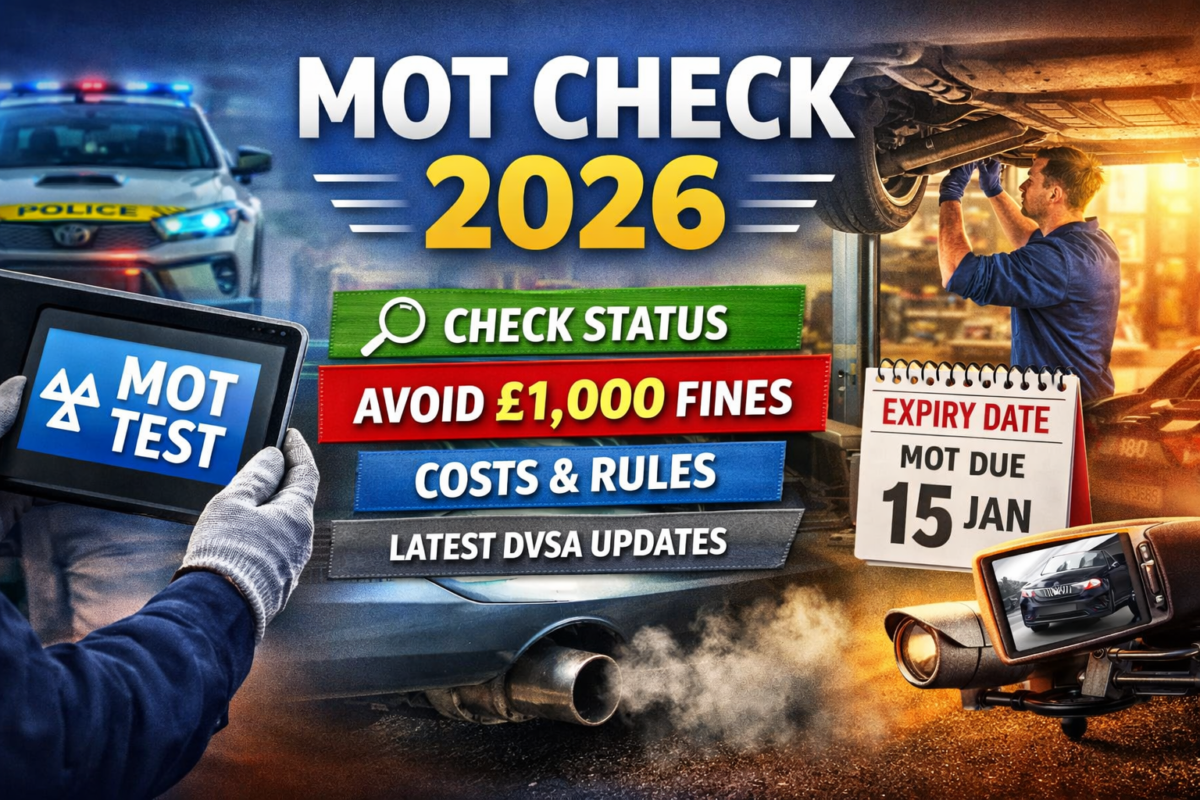
Driving without a valid MOT could cost you up to £1,000 and invalidate your insurance. Fortunately, performing an MOT check takes less than a minute. Here’s how to check your MOT status, understand the latest 2026 DVSA updates, and avoid costly mistakes.
How to Perform an MOT Check
The most reliable and free way is through the official GOV.UK services:
- Check MOT status: Visit ‘gov.uk/check-mot-status‘. Enter the vehicle’s registration number (number plate) to see if it has a valid MOT certificate and its expiry date. New vehicles require their first test by the third anniversary of registration.
- Check MOT history: Go to ‘gov.uk/check-mot-history‘. This shows results from 2005 onward (detailed from 2017+), including pass/fail outcomes, recorded mileage, failure reasons, advisories, and test locations (with V5C details). You can download certificates and view upcoming due dates.
These tools are quick, secure, and updated in real time. Third-party sites (e.g., RAC, Confused.com) offer similar free checks but pull from the same DVSA database.
Current MOT Rules (as of February 2026)
The core MOT test remains unchanged for most drivers in 2026. Key elements include:
- Frequency: First MOT at 3 years old, then annually.
- Cost cap: Maximum £54.85 for Class 4 vehicles (standard cars); garages can charge less.
- Test focus: Brakes, tyres, lights, suspension, steering, seatbelts, emissions, and more. Defects are categorized as minor, major, or dangerous.
- Electric and hybrid vehicles: Additional visual checks for high-voltage orange cabling, traction batteries, and safety components, reflecting rising EV adoption.
The MOT inspection manual saw minor updates in 2025 (e.g., clearer brake testing instructions for 4WD vehicles and quadricycle classifications), but no major overhauls affect everyday tests in early 2026.
Latest Updates in 2026
The DVSA has focused on system integrity and fraud prevention rather than altering the test for owners:
- From 9 January 2026: Stricter disciplinary rules for testers and authorised examiner principals (AEPs). Those with 2- or 5-year cessations (bans) are barred from any MOT-related roles during that period, preventing sanctioned individuals from influencing tests. This applies to single- or multi-site operations with serious violations.
- Anti-fraud measures: Building on 2025 photography trials to combat “ghost MOTs” (fraudulent certificates for untested vehicles, reportedly 80% of fraud cases), photo evidence is becoming more mandatory or widespread in 2026. This requires garages to capture images during verification tests.
- Other notes: Some sources mention February 2026 system updates (e.g., digital records), but these appear administrative. Heavy vehicle testing added ADAS visual checks from 2 February 2026, but this doesn’t apply to private cars.
No changes to the first MOT timing (still 3 years) or to major new failure criteria (e.g., tyre age limits or expanded ADAS checks) remain under consultation/review. Emissions rules for older petrol/diesel cars may tighten in the future, but nothing is confirmed for the immediate 2026 impact.
Why MOT Checks Matter
An invalid MOT can lead to £1,000 fines, insurance invalidation, or vehicle seizure. Regular checks help track mileage discrepancies (potential clocking fraud) and prepare for renewals.
For the latest official details, always refer to GOV.UK or DVSA announcements, as rules evolve to enhance road safety and combat fraud while adapting to electric vehicles.