

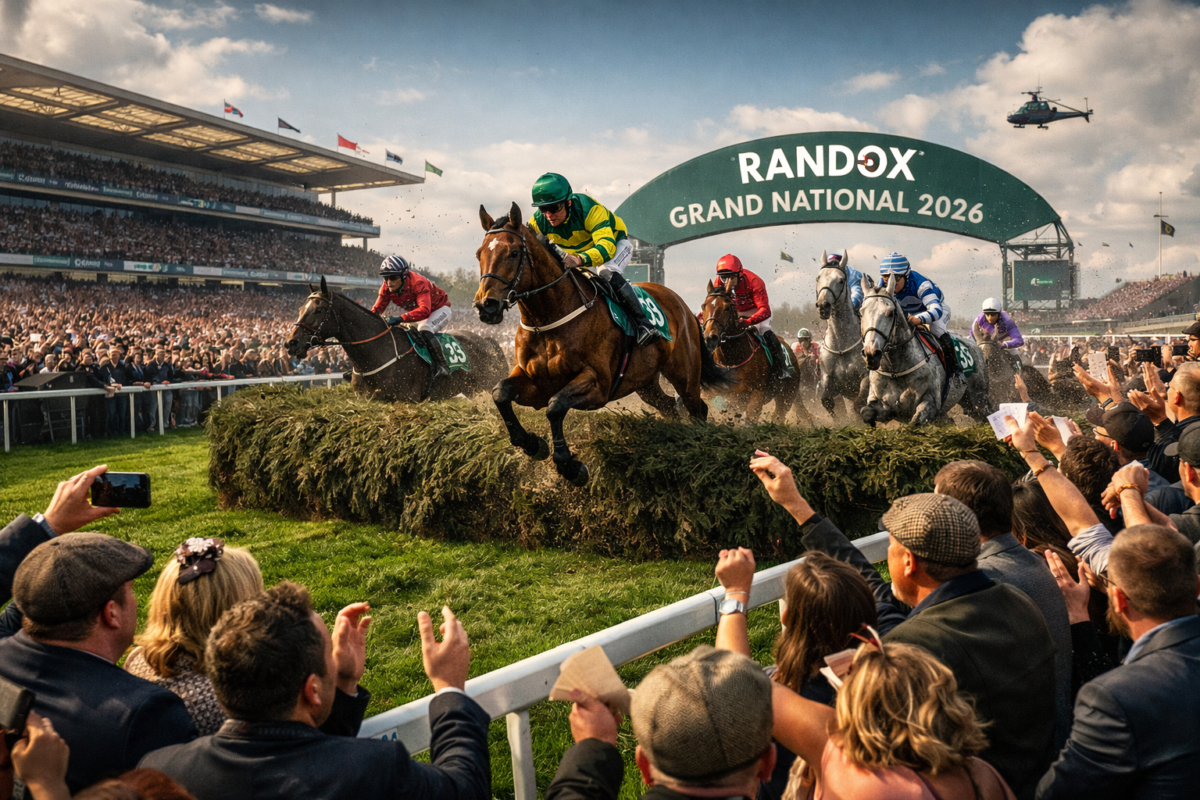
The Randox Grand National is back. On Saturday, April 11, 2026, at 4:00 PM BST, up to 34 of the world’s finest steeplechasers will line up for the 179th running of the most famous and gruelling jumps race on the planet at Aintree Racecourse in Liverpool.
This year’s three-day festival runs from Thursday, April 9 (Opening Day) through Ladies Day on Friday, April 10, culminating in Grand National Day. Over 150,000 fans are expected on-site, while a global audience of around 600 million will tune in from more than 140 countries.
A Brief History of the Grand National
The Grand National was first run in its recognised form in 1839, when Lottery became the inaugural winner over a course that has barely changed in its core layout since. What began as a local Liverpool steeplechase has grown into a global sporting institution, blending raw courage, tactical brilliance, and heart-stopping drama.
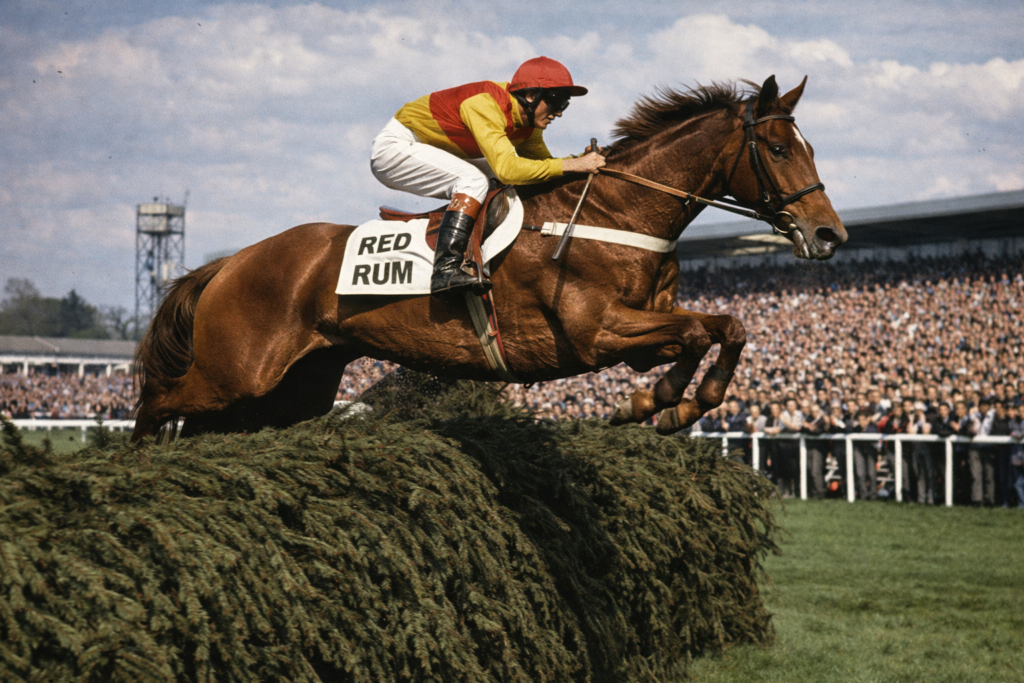
No horse has captured the public’s imagination like Red Rum. Trained by Ginger McCain on the sands of Southport beach, the chestnut gelding won the National in 1973 (in a then-record time of 9:01.9, beating the gallant Crisp in the final strides), 1974, and again in 1977 for an unprecedented third victory — a record that still stands. Red Rum also finished second in 1975 and 1976. His story remains the benchmark of National folklore.
More recent legends include Tiger Roll (back-to-back winner in 2018–19, the first since Red Rum) and I Am Maximus, who powered clear in 2024 under Paul Townend for trainer Willie Mullins. In 2025, stablemate Nick Rockett took the honours — only to be ruled out of 2026 as a non-runner earlier this week.
The Course: 4 Miles, 30 Fences, One Legend
The Randox Grand National is run over 4 miles, 2½ furlongs (approximately 4 miles 514 yards), the longest distance in British jumps racing. Horses must clear 30 fences (16 unique obstacles, 14 of which are jumped twice), testing stamina, jumping ability, and courage like no other race.
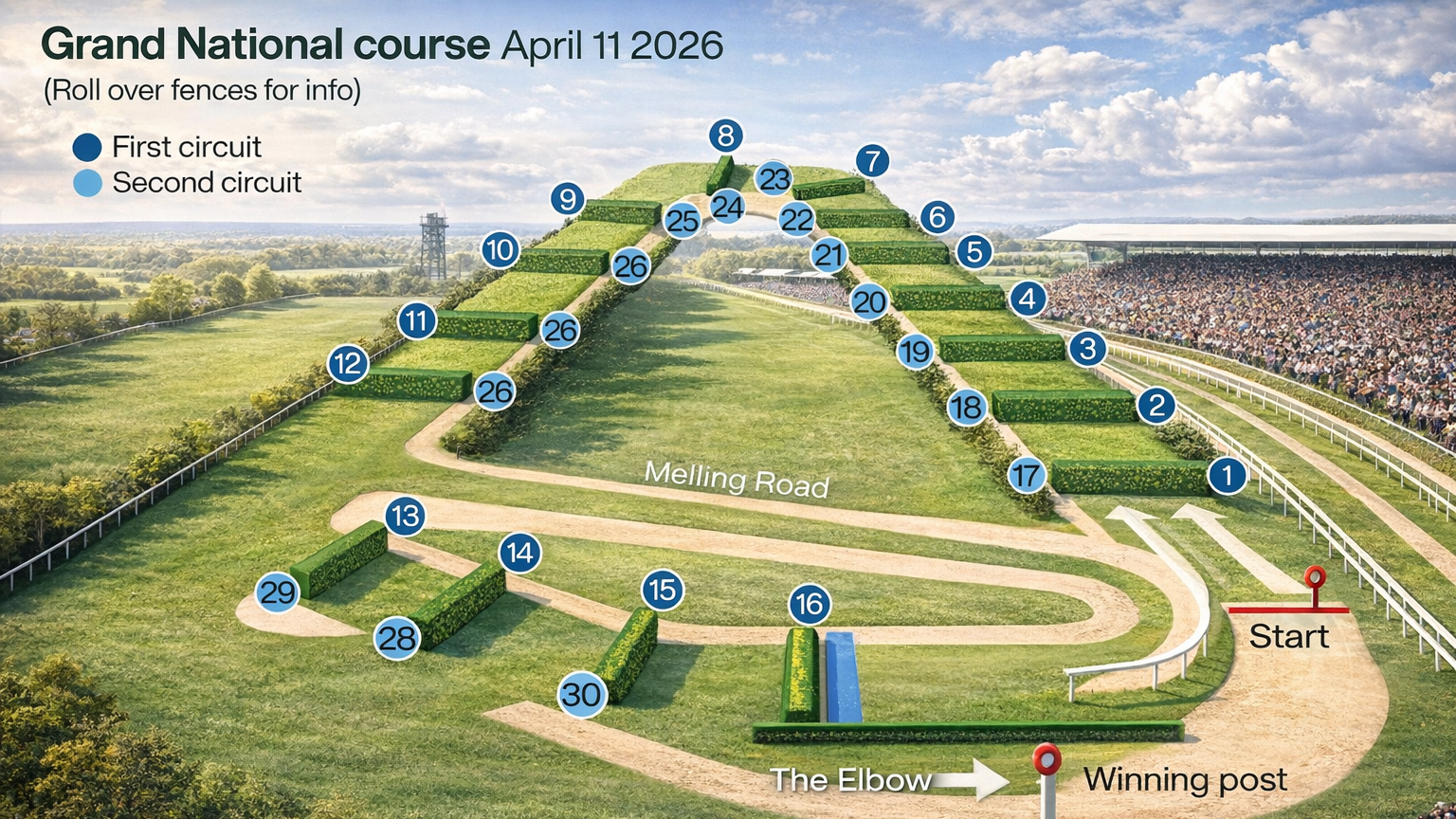
Key fences include:
- Fences 1 & 17 (4ft 6in high): The first fence is a relatively straightforward, plain fence that sets the tone.
- Fences 6 & 22 – Becher’s Brook (4ft 10in high, with a significant drop on the landing side): Named after Captain Martin Becher, who fell here in 1839. One of the most feared obstacles.
- Fences 7 & 23 – Foinavon (4ft 6in): Site of the famous 1967 pile-up that allowed 100/1 outsider Foinavon to win.
- Fences 8 & 24 – Canal Turn (5ft high): A sharp 90-degree left-hand turn immediately after the fence.
- Fences 9 & 25 – Valentine’s Brook (5ft high, with brook on landing): Named after a horse that cleared it backwards in 1840.
- Fence 15 – The Chair (5ft 2in high, the tallest, with a 5ft-wide ditch on the take-off side): Jumped only once; named after the judge’s chair used to measure distances.
- Fence 16 – Water Jump (just 2ft 6in high): The lowest fence, but the water makes it deceptive.
Modern safety modifications (softer plastic birch cores, levelled landing sides, and reduced field size) have significantly improved horse welfare while preserving the race’s unique challenge.
Full 2026 Festival Schedule (Key Races)
Thursday 9 April – Opening Day
Gates open 11:00 am (full card includes Grade 1 races like the Manifesto Novices’ Chase and William Hill Aintree Hurdle).
Friday 10 April – Ladies Day
Gates open 10:30 am (Mildmay Novices’ Chase, Melling Chase, Topham Handicap Chase).
Saturday 11 April – Grand National Day
Gates open at 10:00 am
- 1:55 pm: Turners Mersey Novices’ Hurdle (Grade 1)
- 2:30 pm: William Hill Freebooter Handicap Chase
- 3:05 pm: Jet2 Liverpool Hurdle (Grade 1)
- 4:00 pm: Randox Grand National Handicap Chase (Grade 3)
- 5:00 pm: Weatherbys NH Stallions Standard Open NH Flat Race (Grade 2)
Prize Money and Betting
The total prize fund for the 2026 Grand National is £1,000,000, with the winner receiving £500,000. The purse is distributed down to eighth place.
Current leading contenders (as of April 9, 2026):
- I Am Maximus (10yo, 11st 12lb, Willie Mullins, Paul Townend): Favourite (around 7/1–10/1). 2024 winner and 2025 runner-up. Proven Aintree hero carrying top weight.
- Panic Attack (10yo, 10st 5lb, Dan Skelton, Harry Skelton): Strong recent form; multiple big-race winner.
- Grangeclare West (10yo, 11st 10lb, Willie Mullins, Patrick Mullins): Third in 2025; recent Bobbyjo Chase winner.
- Jagwar (7yo, 10st 10lb, Oliver Greenall & Josh Guerriero, Mark Walsh): Progressive and lightly raced.
Other notables include Iroko, Haiti Couleurs, Monty’s Star, and Johnnywho. Willie Mullins dominates the entries with multiple strong contenders.
How to Watch and Attend
- UK TV: Full coverage on ITV/ITVX and Racing TV. The Grand National itself is free-to-air on ITV.
- Tickets: Many stands are sold out, but general admission and hospitality packages remain available via the official Jockey Club site.
- Global streaming: Available through international racing networks and bookmakers.
Safety, Welfare, and the Modern Grand National
Horse welfare remains the top priority. The maximum field was reduced (now 34 runners), fences have been modified with flexible cores and improved landing areas, and veterinary checks are more rigorous than ever. These changes, introduced progressively over the past decade, have dramatically reduced fall and injury rates while keeping the race’s legendary status intact.
Why the Grand National Still Matters
From Red Rum’s heroics to modern epics like I Am Maximus’s 2024 triumph, the Grand National is more than a race; it’s a British cultural phenomenon that unites millions every spring. Whether you’re backing a fancy at the bookies, enjoying Ladies Day fashion, or simply marvelling at the courage of horse and rider, April 11, 2026, promises another unforgettable chapter.
The fences await. The drama is about to unfold.