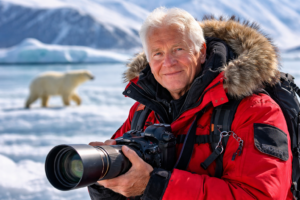


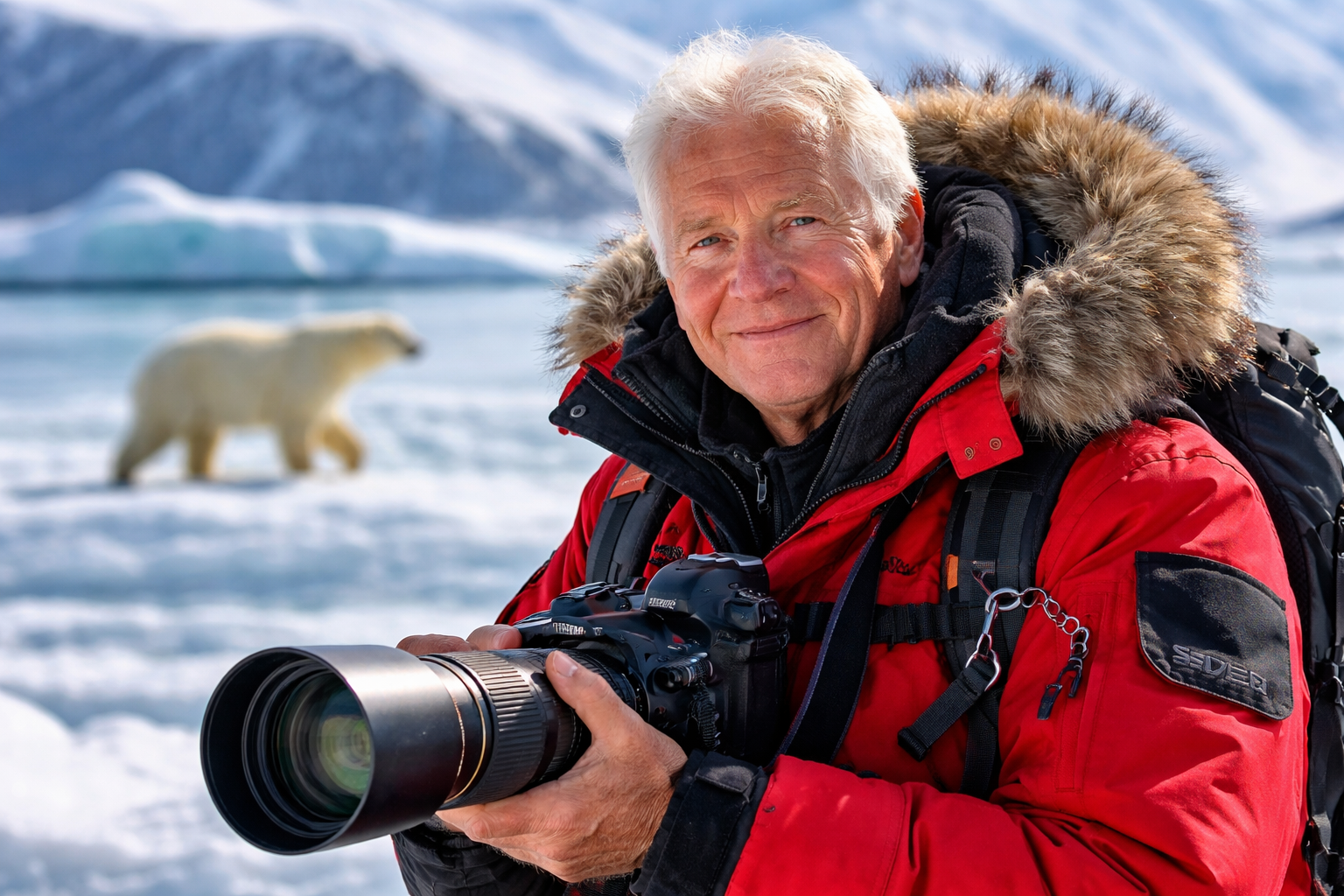
Douglas George Allan, one of the world’s most respected wildlife cameramen and photographers, has died at the age of 74. Best known for his extraordinary work on BBC series such as The Blue Planet, Planet Earth, and Frozen Planet, Allan passed away on 8 April 2026 in Pokhara, Nepal, after falling ill during a trekking expedition to Annapurna Base Camp.
Doctors confirmed that the cause of death was a brain haemorrhage.
Allan had been on a climbing trip with a close friend when he began experiencing breathing difficulties on the first day of the trek, near the Dhampus area. He was initially taken to Care Mark Hospital in Pokhara before being transferred to Manipal Hospital in critical condition. Despite medical efforts, he died early the following morning. His management company later said he passed away “immersed in nature and surrounded by friends”, a description that closely reflects the way he lived his life.
A Life Shaped by Curiosity and the Natural World
Doug Allan was born on 17 July 1951 in Dunfermline, Fife, Scotland, one of twin brothers. From an early age, he showed a deep fascination with the natural world, an interest shaped in part by his father, a photographer and photojournalist who ran a local shop.
As a child, Allan became captivated by the oceans after watching The Silent World, the groundbreaking 1956 documentary by Jacques Cousteau. That fascination led him to snorkelling and diving, passions that would later define his career.
He went on to study marine biology at the University of Stirling, graduating with honours in 1973. But rather than follow a traditional scientific path, Allan sought adventure. He worked briefly as a pearl diver with Bill Abernathy, Scotland’s last professional pearl hunter, before joining the British Antarctic Survey in 1976.
Over the next eight years, Allan lived and worked in some of the most extreme conditions on Earth, spending four winters and nine summers in Antarctica, including time on Signy Island in the South Orkney Islands. His contributions earned him the Polar Medal twice, in 1983 and again in 2010.
The Moment That Changed Everything
A defining turning point came in 1981, during an Antarctic expedition, when Allan met David Attenborough.
Emerging from icy waters after a dive, Allan approached Attenborough with a simple but bold question: how to break into natural history filmmaking. Encouraged by the encounter, he bought a 16mm camera for his next trip, filmed emperor penguins, and sold the footage to the BBC.
That moment marked the beginning of a remarkable career. By 1985, Allan had become a full-time wildlife cinematographer.
Filming at the Edge of the World
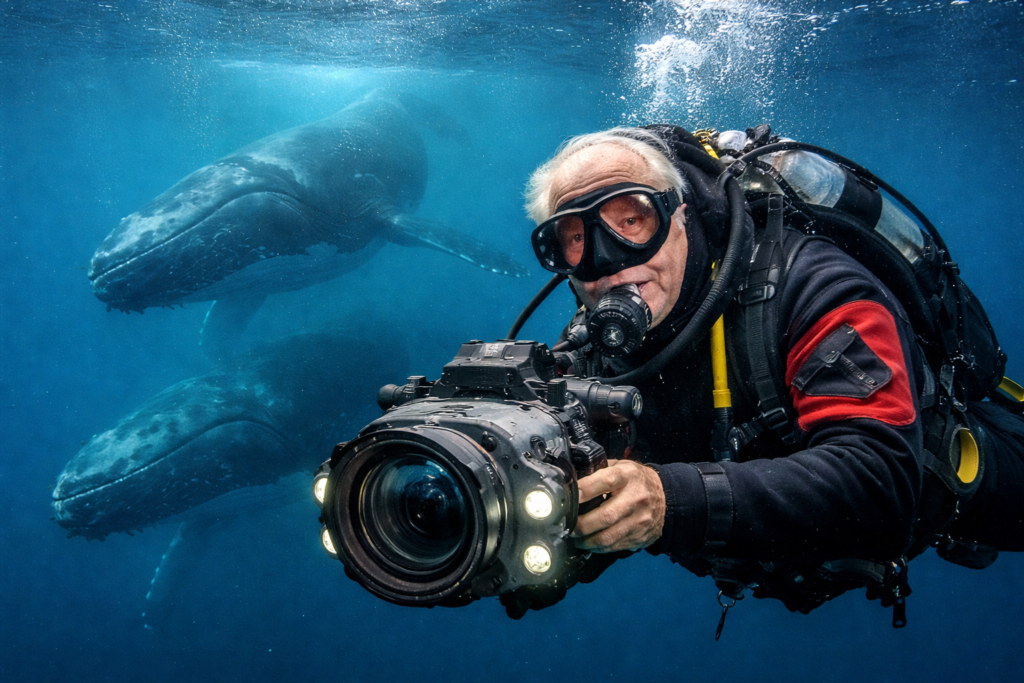
Doug Allan built his reputation by going where few filmmakers could, or would. He specialised in filming in extreme environments: beneath polar ice, in freezing oceans, and across remote, inhospitable landscapes.
He served as principal cameraman on landmark productions, including:
- Life in the Freezer
- Wildlife Special: Polar Bear
- The Blue Planet
- Planet Earth
- Frozen Planet
- Human Planet
Over his career, he spent roughly 620 days filming polar bears, capturing intimate and rarely seen behaviours. His work brought audiences face-to-face with wildlife in ways that felt immediate and deeply personal, from a polar bear pressing its nose against a camera housing to dramatic underwater encounters with walruses.
Awards, Recognition, and Advocacy
Allan’s work earned widespread recognition across the industry. His honours included:
- Eight Primetime Emmy Awards
- Four BAFTA Awards
- Five Wildscreen Panda Awards
He also received the Outstanding Contribution to Craft award at the British Academy Scotland Awards in 2017. Beyond filmmaking, he was made an Honorary Fellow of both the Royal Photographic Society and the Royal Scottish Geographical Society.
In 2024, he was appointed an Officer of the Order of the British Empire (OBE) for his contributions to broadcasting and environmental awareness.
Outside of filming, Allan was a passionate communicator and campaigner. He delivered talks, appeared on BBC Radio 4, and spoke out on environmental issues. As recently as February 2026, he had urged the Scottish government to support legislation targeting environmental destruction.
Tributes to a Pioneer
Following news of his death, tributes poured in from colleagues, friends, and the wider natural history community.
His management company described him as “a true pioneer of wildlife filmmaking” whose work brought people closer to the natural world and inspired a deeper respect for the planet.
His ex-wife, wildlife photographer Sue Flood, shared a deeply personal tribute. She recalled how Allan had helped shape her own career and described him as “brilliant,” “determined,” and a passionate conservationist. Reflecting on his final days, she noted that there was comfort in knowing he had been on an adventure with a close friend, something he had done throughout his life.
A Lasting Legacy
Doug Allan’s work helped define modern wildlife filmmaking. Through his lens, millions of people experienced places they would never visit and encountered animals they might never otherwise see.
More than just documenting nature, he changed how people connected with it, making distant ecosystems feel immediate, fragile, and worth protecting.
From the frozen waters of Antarctica to the mountains of Nepal, Allan spent his life doing what he loved: exploring, observing, and sharing the natural world. His death, while sudden, came during one of those journeys.
He leaves behind not just a remarkable body of work but a legacy of curiosity, courage, and deep respect for the planet, one that will continue to inspire generations to come.