



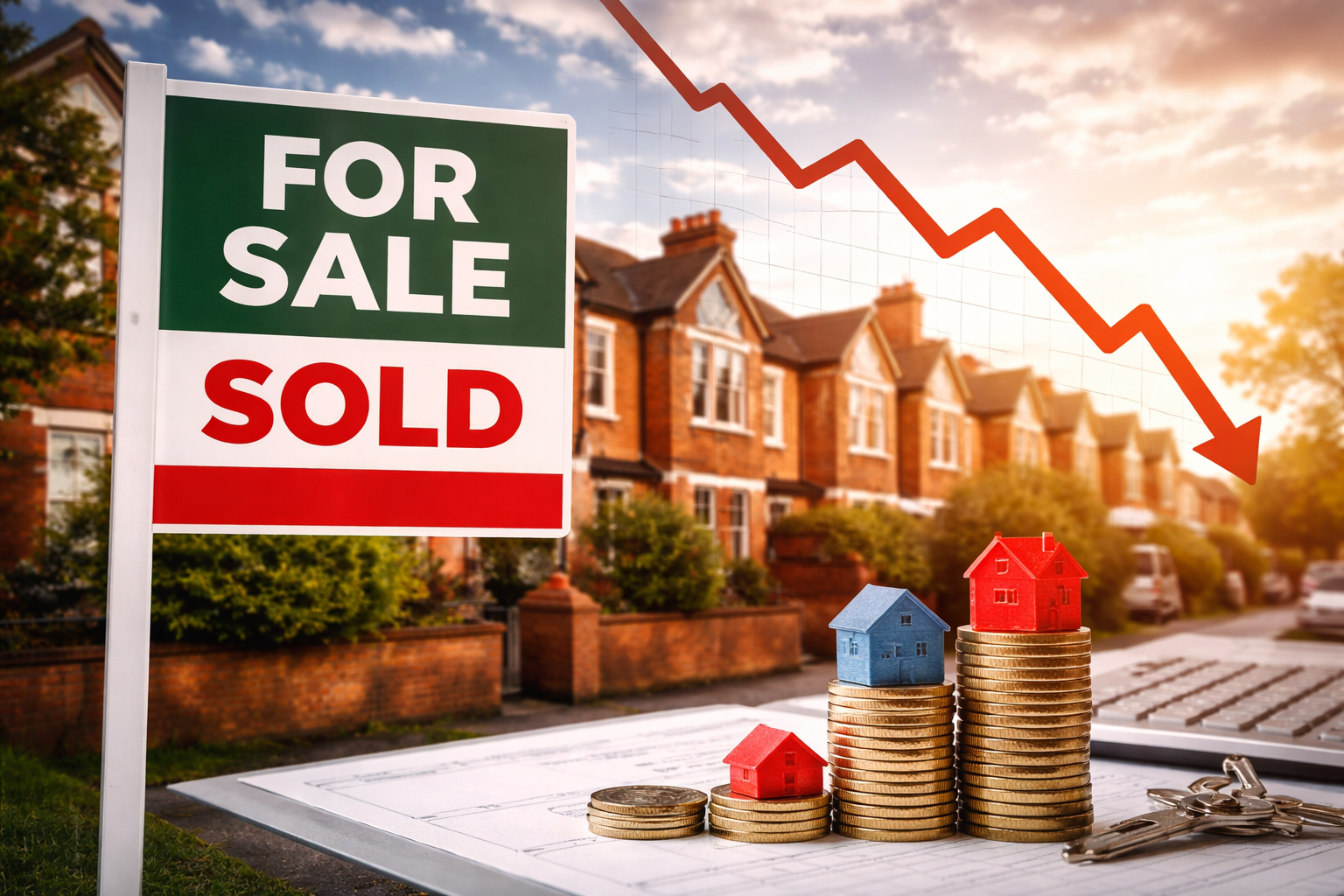
The question of a UK house price crash resurfaces with every shift in interest rates or global event. In early 2026, headlines about rising mortgage costs, geopolitical tensions in the Middle East, and economic uncertainty have revived crash fears. Yet the latest official data and forecasts from major lenders paint a far more stable picture: the market is showing modest growth, not collapse.
As of April 2026, mainstream analysis points to low single-digit price increases for the year overall, typically 1% to 4%, rather than any nationwide downturn. The housing market remains resilient, underpinned by chronic undersupply and limited forced selling, even as affordability stays stretched for many buyers.
Current State of the UK Housing Market
UK house prices hit a new milestone in early 2026. According to the Halifax House Price Index, the average property price reached £301,151 in February 2026, up 0.3% month-on-month and 1.3% year-on-year, the strongest annual rate in four months. Prices rose by around £3,000 in the first two months of the year alone.
The Office for National Statistics (ONS) / UK House Price Index reports a lower average of approximately £268,000-£271,000 (as of late 2025/early 2026 data), with annual growth around 1.3% in January. Nationwide’s figures sit in a similar range, showing steady but unspectacular momentum.
Growth slowed noticeably in 2025 (around 0.7%-2% annually, depending on the measure), but the market avoided sharp declines. Mortgage approvals have held near pre-pandemic levels, and transaction volumes, while subdued, have not collapsed. The market is best described as “steady” or “resilient” rather than booming or busting.
Mortgage Rates and Affordability Pressures
The Bank of England base rate stands at 3.75% as of March 2026, held steady amid concerns over inflation rising to around 3% due to higher global energy costs from Middle East tensions. Further rate cuts in 2026 now look limited or delayed, with markets pricing in stability rather than aggressive easing.
Typical fixed mortgage rates have ticked up slightly in recent months (often in the 4.5%–5.5% range depending on loan-to-value and term), making borrowing more expensive than the ultra-low rates of the 2010s. This has reduced affordability, particularly for first-time buyers needing large deposits. However, real wage growth has outpaced house price increases recently, offering some relief, and monthly mortgage costs as a share of income for many new buyers are at their lowest since 2022.
Why Crash Fears Keep Circulating
Several factors fuel speculation of a 2026 crash:
- Affordability challenges: House prices have significantly outpaced wages over the past decade in many areas, leaving first-time buyers and those in high-price regions (especially London and the South East) struggling.
- Geopolitical and economic risks: Rising energy prices and inflation uncertainty could keep borrowing costs elevated longer than expected, dampening demand.
- Segment-specific weakness: Certain new-build flats, high-end properties in central London, and areas with cladding or service charge issues have seen localised price corrections or higher rates of sales at a loss.
- Cyclical theories: Some analysts reference long-term 18-year property cycles or post-2008 patterns, suggesting a downturn window around 2026–2028. These remain fringe compared to lender consensus.
Increased supply of homes for sale in some regions has also given buyers more negotiating power, leading to flatter or slightly softer prices in parts of the South.
Expert Forecasts: Modest Growth, Not Decline
Leading institutions are consistent in ruling out a crash. Key 2026 predictions include:
- Nationwide Building Society: 2%-4% growth, citing gradual improvements in affordability as incomes grow faster than prices and mortgage approvals remain solid.
- Halifax: 1%-3% rise, describing the market as moving steadily with some regional variation.
- Rightmove, Savills, and Hamptons: Around 2%-2.5% national growth, with stronger performance expected in northern England, Scotland, Wales, and the Midlands (potentially 3%+ in places), while London and the South East may see flatter results (around 1% or less).
These forecasts assume no major economic shock. Even more optimistic voices, such as some independent economists, see potential for 3%+ growth if wage gains continue and confidence improves. No major forecaster predicts a negative year for national average prices.
Factors Supporting Market Stability
Several structural strengths reduce crash risk:
- Chronic housing shortage: Long-term undersupply of new homes continues to act as a floor under prices, even when demand softens.
- Low forced selling: Most homeowners hold significant equity after years of prior growth and are protected by fixed-rate mortgages. Negative equity and repossessions remain rare outside isolated cases.
- Stable labour market: Unemployment is relatively low, limiting widespread distress sales.
- Resilient demand: First-time buyers and movers remain active, supported by steady mortgage lending.
Regional differences are pronounced. The north-south divide has narrowed somewhat, with stronger relative growth in northern regions and Scotland helping balance the market.
Potential Risks and a More Likely Scenario
No outlook is risk-free. Upside risks to inflation from global events could delay rate cuts or push mortgage costs higher, cooling demand further. A sharper rise in unemployment or prolonged economic slowdown would add pressure. New rental regulations under the Renters’ Rights Act (effective from spring 2026) may cause short-term disruption in the lettings sector, indirectly affecting some investor-owned properties.
The most probable path for 2026 is stagnation or mild adjustment in weaker areas (particularly certain London flats or high-end segments) alongside modest national growth. Transaction volumes are likely to remain subdued rather than surge, with buyers gaining more choice and negotiating power in slower markets. Greater regional divergence means local conditions, such as employment, new infrastructure, or school catchments, will matter more than ever.
Practical Advice for Buyers and Sellers in 2026
For buyers: Focus on affordability and long-term needs rather than timing the market. Northern and midland regions may offer better value and slightly stronger price momentum. First-time buyers should seek professional mortgage advice early, explore government schemes where eligible, and prioritise properties in realistic price brackets.
For sellers: Price realistically based on local comparables. In strong areas, realistic asking prices should attract steady interest; overpricing in softer segments risks prolonged time on the market. Homes in good condition with low running costs will stand out.
Overall, avoid panic driven by crash headlines. The UK housing market in 2026 is adjusting to higher-for-longer borrowing costs and a post-pandemic normal, not entering freefall.
Conclusion: Adjustment, Not Crash
The evidence as of April 2026 is clear: talk of a UK-wide house price crash is overstated. Prices are near record highs but growing slowly, supported by fundamental supply constraints and limited distress in the owner-occupied sector. While affordability challenges and localised weaknesses are real, the consensus from Halifax, Nationwide, Rightmove, Savills, and others points to modest 1–4% growth nationally.
Buyers and owners should base decisions on personal finances, location, and quality rather than speculative headlines. The market is not booming, but it is also far from crashing, it is simply finding a new, more sustainable balance.