



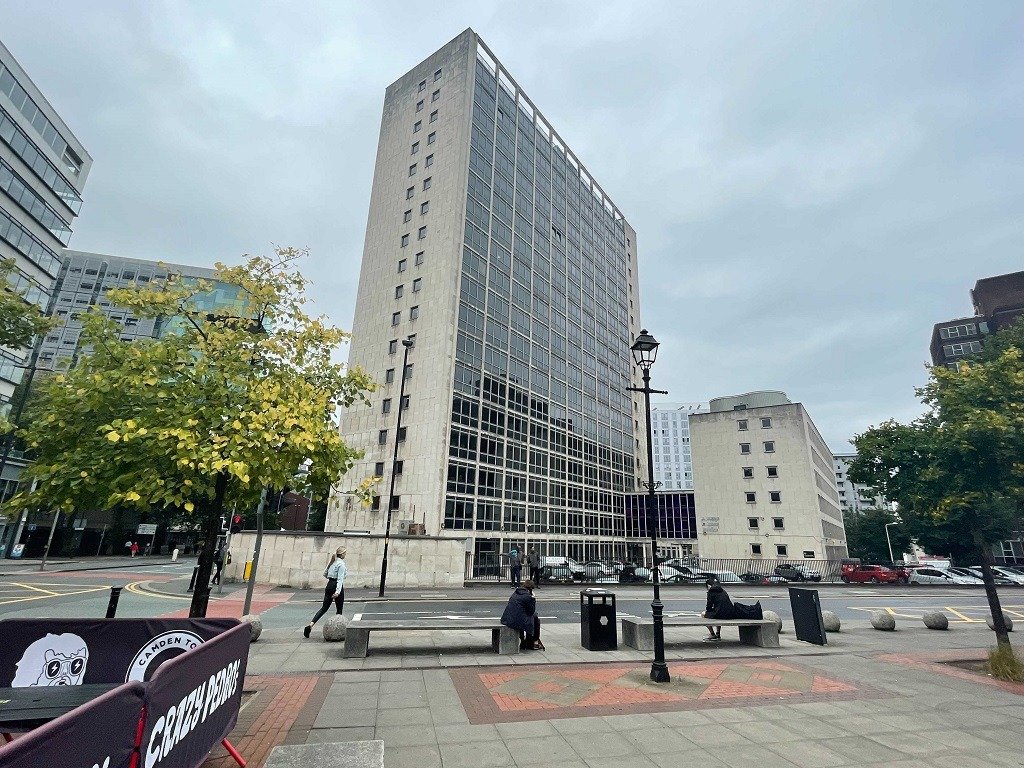
On Friday, October 24, 2025, Manchester’s bustling city centre was rocked by a dramatic incident: the partial collapse of Alberton House, an empty building off Bridge Street, during ongoing demolition work. The event shook local residents and businesses, triggering swift emergency responses and widespread evacuations.
Timeline and Details of the Collapse
Alberton House had long been earmarked for ambitious redevelopment, a new 18-storey office complex equipped with luxury amenities, from a rooftop swimming pool to wellness facilities. Demolition work was in full swing when, just after 2:50 PM, scaffolding unexpectedly gave way and a section of the building tumbled, sending debris and dust surging into the River Irwell and surrounding streets.
Witnesses likened the sensation to an earthquake, describing the ground shaking and clouds of dust as the structure came down. Bystanders nearby and workers in adjacent buildings rushed to windows and quickly evacuated as tremors rattled the area.
Eyewitness Accounts: “Like an Earthquake”
The impact was immediate and visceral. Many witnesses recounted a “strong earthquake-like feeling,” with one local employee stating, “We felt the tremors and were uncertain whether the building was collapsing; then we noticed the clouds of dust”. Some reported loud bangs and a slow whirring sound, leading to confusion and rapid responses as the dust cloud barrelled toward onlookers.
George Jones, owner of the adjacent Cardinal House, was forced to evacuate approximately 500 people from his premises, underscoring the scale and seriousness of the incident. “While we were aware of the renovations, we were never informed that our safety would be at risk or that an evacuation would be necessary,” Jones stated.
Emergency Response and Safety Measures
Emergency services responded rapidly, with Greater Manchester Fire and Rescue dispatching crews to St Mary’s Parsonage shortly after the collapse. Firefighters ensured that neighbouring buildings were cleared and confirmed, remarkably, that no one was injured. After assessing the scene, the matter was handed over to building control authorities for further investigation and oversight.
Site Redevelopment and Future Plans
Before the collapse, Alberton House was already a focal point of redevelopment plans. Its replacement, known as ‘The Alberton,’ is meant to establish a new architectural landmark in Manchester city centre, featuring modern workspaces and wellness amenities. Approval for redevelopment had been secured years earlier, with key features such as a hydrotherapy pool, a yoga terrace, and advanced fitness studios, all designed to set new standards for commercial real estate in the area.
The incident has undoubtedly cast uncertainty over the timeline and safety procedures for ongoing and future construction. In June 2025, the local planning committee accepted a phased demolition and enabling works proposal to manage risk and accelerate completion, but the unplanned collapse has raised questions about oversight and public safety.
Official Statements and Public Reactions
The site’s owners, Bruntwood SciTech, promptly responded with assurances that all safety protocols had been followed and that there was no immediate risk to workers or the public. Their spokesperson emphasised the complexity of demolition work in dense urban areas and the importance of adhering to stringent standards.
Residents and businesses, however, expressed concerns about the lack of advanced warning and the frightening experience of the building shaking. “Everyone across the building, which has eight floors, felt it. We’d been feeling tremors during demolition work for weeks, but this was something else entirely,” said a worker at a neighbouring property.
Technical Analysis: Possible Causes
While an official cause is pending further investigation by city authorities and building control, preliminary reports pointed to a scaffolding failure during the demolition process. Engineers frequently warn that controlled demolition, particularly in crowded city centres, requires careful risk management and real-time monitoring of both structural stability and the surrounding public environment.
The Manchester collapse may serve as a catalyst for renewed scrutiny and debate over building standards, demolition regulations, and the communication protocols between developers, city officials, and the wider public.
The Broader Impact on Manchester
Manchester’s city centre has seen an explosion of development and investment in recent years, with historic buildings frequently repurposed or replaced to meet demand for office space and amenities. Alberton House’s collapse is a rare but stark reminder of the challenges that come with transformation.
For now, business owners, workers, and local residents are left grappling with the aftermath: dust-filled streets, disrupted routines, and lingering unease about safety in renewal projects. Many expect local authorities and developers to increase transparency and tighten safety controls to prevent repeats of Friday’s frightening scene.
What Happens Next?
Investigations by Manchester City Council and building control are underway to identify root causes and adjust protocols as needed. Residents and city officials await detailed findings while redevelopment leaders recalculate their next steps, hoping to reassure the public and keep iconic projects moving forward.
As Manchester continues to modernise, the collapse of Alberton House stands as both a cautionary tale and a call for vigilance, reminding everyone that the city’s future depends not just on ambition and investment but also on rigorous safety standards and community trust.






1 Comment
Pingback: Paloma Faith Pregnant with Third Child: Heartwarming News